


Skip to content
Speak with our concierge(561) 672-7613

Hypermobility and EDS · Boca RatonFor loose joints and a racing heart.

Ehlers-Danlos syndrome (EDS) weakens the connective tissue in your joints, skin and blood vessels. Many people with EDS also feel their heart race when they stand. Dr. Lisa Corsa’s program cares for both sides, one-to-one, by appointment.

They will do everything they can to make you better including researching the latest treatment available for your condition.
Richard C. · Boston, Massachusetts · client letter 5.0 on Google ↗
Dr. Lisa Corsa in a navy suit and scarf
Dr. Lisa CorsaFounder, Premier Therapy Solutions

What it is

Connective tissue that gives too easily.

Ehlers-Danlos syndrome (EDS) is a group of inherited conditions that weaken connective tissue, the proteins that support your skin, bones, blood vessels and organs. About 1 in 5,000 people has it. Joints that move too far, called hypermobility, are the hallmark of hypermobile EDS, one of the two most common forms.

There is no cure. Care means managing the symptoms, often with medicine and physical therapy, and learning to protect your joints. Our part is the physical therapy, one-to-one.

Signs it may be what you have

  • Loose joints that slip out of place or ache
  • Soft, stretchy skin that bruises easily
  • Scars and wounds that heal poorly
  • Fragile, small blood vessels
  • A racing heart or dizziness when you stand

Sources: MedlinePlus and MedlinePlus Genetics, U.S. National Library of Medicine; the racing-heart sign from the NINDS. This page shares general information, not medical advice.

The heart side of EDS

When standing up sets your heart racing.

Many people with EDS or hypermobility also have dysautonomia, a problem with the nerves that run heart rate and blood pressure. One common form is POTS: on standing, the heart can speed up by more than 30 beats a minute, often with dizziness, palpitations or fainting.

Moving less makes it worse, yet exercise can be harder with these conditions. That is why the Ehlers-Danlos Society advises working with a physical therapist, and why we build your heart’s tolerance slowly, one stage at a time.

How we build it, stage by stage

Start lying down

Work begins where your heart has the least to fight: lying down, with every joint supported.

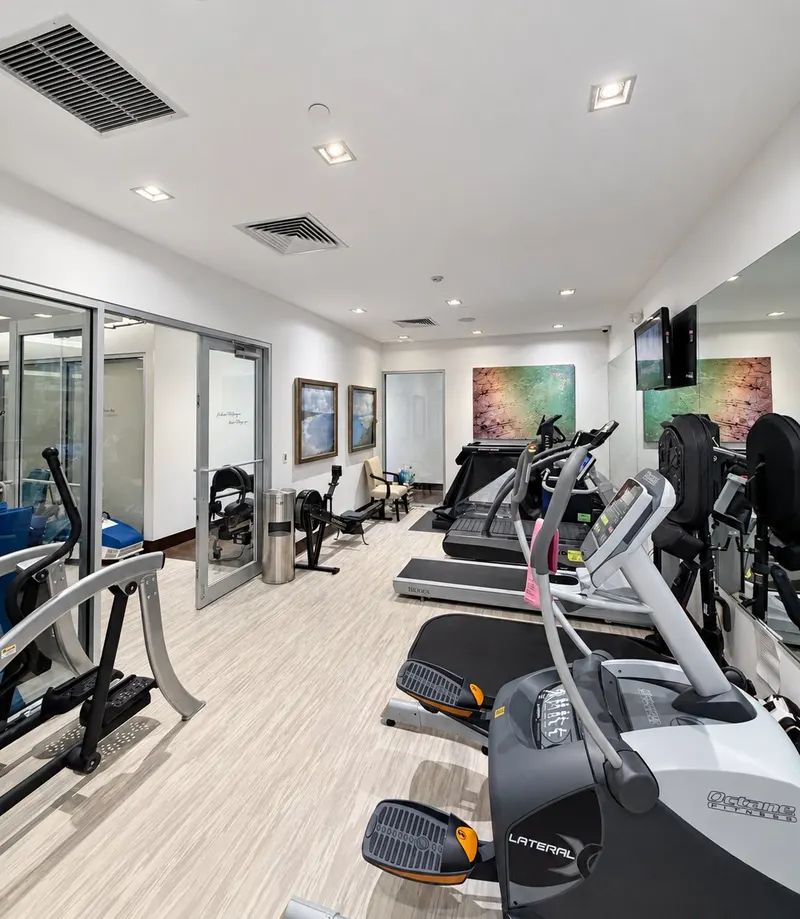
The cardio room at PTVIP's private facility in Boca Raton
The cardio room at our private facility

If you have vascular EDS

Vascular EDS can cause blood vessels and organs to tear. Your physicians lead that care. We pace every session to their guidance, and we can go with you to their consults as your medical liaison.

Request a private consultation

Sources: National Institute of Neurological Disorders and Stroke and The Ehlers-Danlos Society. Talk with your doctor before you change your exercise, salt or fluids.

How the program works

First find how you move, then treat that.

At PTVIP’s private facility in Boca Raton, by appointment only, Ehlers‑Danlos syndrome physical therapy starts with how your whole body moves.

How we find the cause

The Muscular Balance Evaluation

Dr. Corsa developed it to measure how you move. It includes:

  1. Manual muscle testingHer hands, testing each muscle group
  2. Surface EMGSensors on your skin that read how your muscles fire
  3. Posture, walk and spineHow your whole body carries the load

When it is done, you know your muscle imbalances and leave with a prescription for what to work on.

Then, the treatment

One-to-one sessions

Every session is with your therapist alone, paced to your joints and to how your heart handles the work that day.

Joints you can trust

Strength around loose joints, and the habits that protect them from the next injury.

With your own doctors

We can go with you to your other doctors’ consults as your medical liaison, so your care stays joined up.

How the Corsa Method works

Questions

Questions about EDS and hypermobility.

Something not answered here? Call (561) 672-7613.

Is hypermobility the same as EDS?

Not always. Loose joints can be part of EDS, or a condition of their own called hypermobility spectrum disorder (HSD), which also brings instability, injuries and pain. The program treats both.

Can hypermobility cause heart palpitations?

It can be linked. Many people with EDS or HSD also have dysautonomia, such as POTS, and a racing or pounding heart is one of its signs. Your doctor diagnoses it, often with a standing test or a tilt table test.

Is exercise safe with EDS?

The Ehlers-Danlos Society calls exercise an important part of managing EDS, and advises doing it with a physical therapist. We start where your joints and heart are safest, then build slowly.

Should I add salt for POTS?

Some people with POTS are told to take more fluids and salt. It is not right for everyone, especially with high blood pressure, heart disease or kidney disease, so ask your doctor first.

Do I stop seeing my doctors?

No. We do not diagnose EDS or prescribe medicine. We work alongside your doctors, and we can go with you to their consults as your medical liaison.

Can I do the program if I live out of town?

Yes. Clients have come from Austin, Boston, New York and London. See how to plan your visit. PTVIP Concierge clients can also be treated at home or while they travel.

Speak with our concierge

Your consultation, step by step.

Four steps from your first message to your plan, in Boca Raton or wherever you are. Arranging care for a parent? We can work with you from anywhere.

  1. 1
    Request a private consultationUse the form or call us.
  2. 2
    Speak with our conciergeWe plan the where and when with you: our facility, or on location.
  3. 3
    Meet your coordinating doctorA full review of your history and a physical examination.
  4. 4
    Your plan, in writingA written report, with a copy for your own doctor if you would like.
Premier Therapy Solutions
2595 NW Boca Raton Blvd
Boca Raton, FL 33431

Request a private consultation

A line or two is plenty.